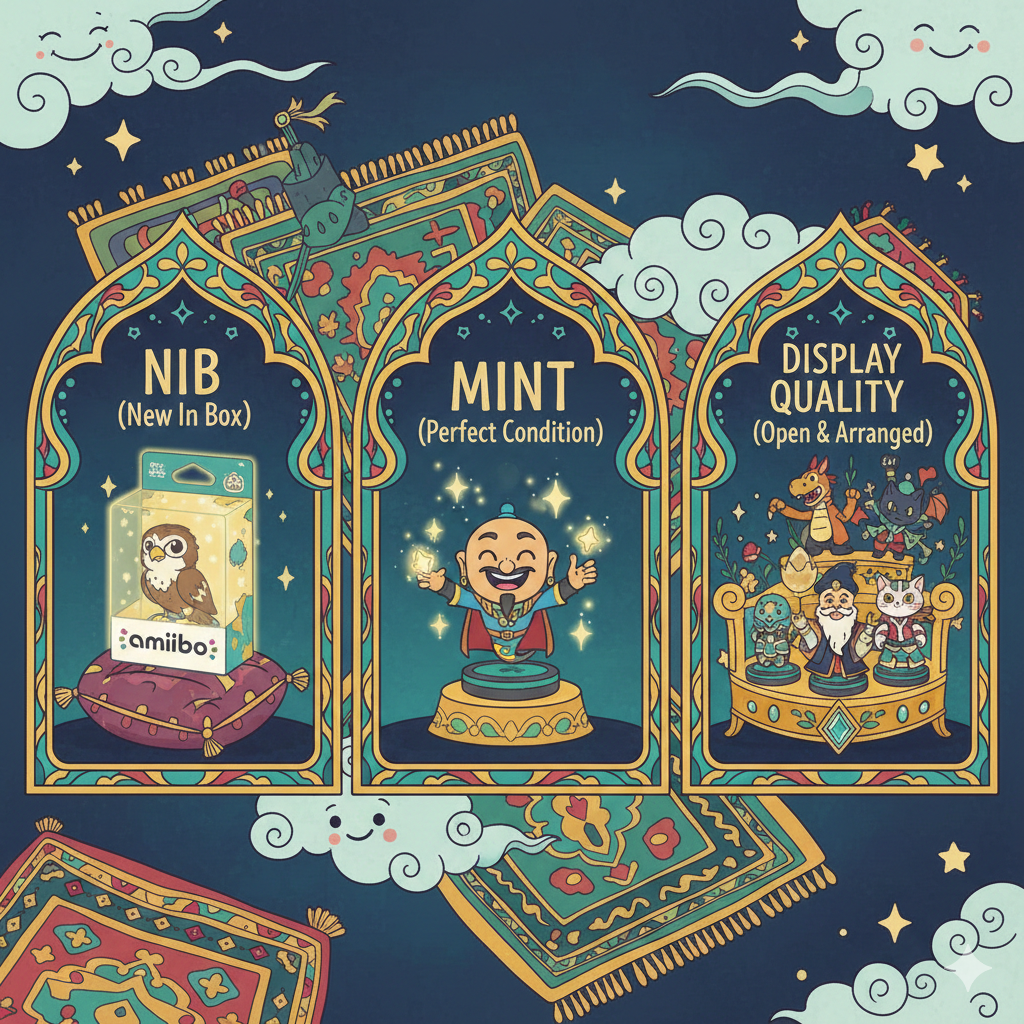
Why Condition Matters in Amiibo Collecting
In the world of collectible toys, condition is everything. A mint-condition "unicorn" amiibo can sell for triple the price of the same figure with damaged packaging, while out-of-box figures trade at steep discounts compared to their sealed counterparts. For amiibo collectors, understanding condition grading is essential whether you're building a pristine new-in-box (NIB) showcase, hunting for budget OOB deals, or evaluating secondhand purchases.
Unlike graded trading cards or sealed video games, amiibo lack a formalized professional grading system like PSA or VGA. Instead, the community relies on standardized terminology and visual assessment to determine condition. This guide provides the framework collectors use to evaluate, price, and preserve their amiibo collections.
NIB vs OOB: The Fundamental Split
New in Box (NIB)
NIB amiibo remain sealed in their original retail packaging, with the figure visible through the plastic window. NIB collectors prioritize:
- Investment Potential: NIB figures retain and appreciate in value more than opened ones
- Display Aesthetics: Uniform boxes create visually appealing wall or shelf displays
- Preservation: Sealed packaging protects figures from dust, UV damage, and handling wear
- Completeness: Guarantees all components (figure, base, packaging) are present and unmodified
However, NIB collecting has drawbacks: you cannot inspect the figure closely for paint defects without opening, and boxes require significant display space (each amiibo box measures approximately 7" x 5.5" x 3").
NIB (left) vs OOB (right) - condition affects value significantly
Out of Box (OOB)
OOB collectors remove figures from packaging to display them freely or use their NFC functionality. OOB collecting offers:
- Cost Savings: OOB figures sell for 30-50% less than NIB equivalents
- Space Efficiency: Figures without boxes require less shelf space, allowing denser displays
- Full Appreciation: View figures from all angles, appreciate sculpting details, and handle them
- Functional Use: Scan them in games without worrying about decreasing value
The trade-off: OOB figures rarely appreciate in value and are more vulnerable to damage, dust accumulation, and paint wear over time.
NIB Grading Scale: From Mint to Poor
NIB condition is evaluated based on packaging integrity, figure condition (visible through plastic), and overall presentation. The community uses a six-tier scale:
Mint / Pristine (10/10)
Description: Flawless condition with zero defects.
Characteristics:
- Packaging has no creases, dents, scratches, or discoloration
- Plastic window is crystal clear with no scuffs or cloudiness
- Figure inside shows perfect paint application with no smudges or missing details
- Price sticker never applied (or removed perfectly with no residue)
- Cardboard backing is crisp with sharp corners
Market Impact: Commands full market value or premium for rare figures. Serious collectors pay extra for mint specimens.
Near Mint (8-9/10)
Description: Excellent condition with only minor, barely noticeable imperfections.
Acceptable Flaws:
- Tiny corner ding on cardboard (less than 2mm)
- Slight shelf wear on edges
- Minor packaging glue residue (not on visible display side)
- Small price sticker residue on back or bottom (not front)
Market Impact: 90-95% of mint value. Most collectors consider near mint acceptable for display-grade collections.
Very Good (6-7/10)
Description: Noticeable but not severe damage to packaging.
Common Issues:
- Visible creases on cardboard backing
- Multiple corner dings or edge wear
- Light scratches on plastic window
- Price sticker on front that left residue after removal
- Minor discoloration on white areas of packaging
Market Impact: 70-85% of mint value. Acceptable for functional collectors who want sealed figures but don't prioritize pristine packaging.
Good (4-5/10)
Description: Significant packaging damage but figure remains sealed and protected.
Typical Damage:
- Crushed corners or moderate box warping
- Cloudy or scratched plastic window obscuring figure details
- Torn cardboard (but not fully separated)
- Noticeable sun fading or discoloration
- Tape residue or sticker remnants on display side
Market Impact: 50-65% of mint value. Often purchased by collectors who plan to open them anyway or use them functionally.
Fair (2-3/10)
Description: Heavy damage to packaging, possibly affecting figure protection.
Severe Issues:
- Partially detached cardboard backing
- Broken plastic window or tears exposing figure
- Water damage or mold on packaging
- Crushed box significantly affecting shape
- Figure inside shows visible paint defects or damage
Market Impact: 30-45% of mint value. Only valuable if the figure itself is rare; packaging is essentially worthless.
Poor (1/10)
Description: Packaging is destroyed or missing major components.
Conditions:
- Cardboard backing completely separated or missing
- Plastic torn or removed
- Packaging pieces lost
- Figure may be damaged or have missing components
Market Impact: Equivalent to OOB pricing. The "NIB" designation no longer applies.
Grading tip: When photographing for sale, show all six sides of the package plus close-ups of any damage. Transparency prevents disputes.
OOB Grading Scale
Out-of-box figures are graded primarily on figure condition, as packaging is discarded or irrelevant.
OOB Mint (10/10)
- Figure looks factory fresh with perfect paint
- No scratches, scuffs, or discoloration
- Base is pristine with no wear on NFC symbol or feet
- No dust accumulation
OOB Near Mint (8-9/10)
- Minor dust that can be cleaned
- Barely visible micro-scratches on base
- Tiny paint imperfections (often factory defects)
OOB Very Good (6-7/10)
- Noticeable scratches or scuffs on figure or base
- Minor paint chips (less than 2mm)
- Slight yellowing or discoloration from UV exposure
OOB Good (4-5/10)
- Multiple paint chips or scratches
- Visible discoloration or fading
- Minor structural damage (loose joints, bent parts)
OOB Fair/Poor (1-3/10)
- Major paint loss or damage
- Broken components
- Non-functional NFC chip
Regional Packaging Differences
Amiibo packaging varies by region, which affects both collectibility and grading considerations:
North American (USA/Canada)
- Text: English and French (bilingual packaging required in Canada)
- Rating: ESRB ratings on some game-specific amiibo
- UPC: Standard 12-digit UPC barcode
- Collectibility: Most common in Western markets; typically valued equally to other regions unless specifically seeking NA variants
European (EU/UK)
- Text: Multilingual (often 5+ languages on back)
- Rating: PEGI rating system
- Barcode: EAN-13 barcode
- Collectibility: Some exclusive releases never came to North America (Wedding Mario set), making EU packaging valuable to NA collectors
Japanese
- Text: Predominantly Japanese with some English
- Barcode: JAN barcode
- Design: Often features alternate artwork or color schemes
- Collectibility: Highly sought by Western collectors for "cleaner" packaging (less regulatory text) and exclusives like Qbby
Australian
- Text: English
- Rating: ACB (Australian Classification Board) ratings
- Collectibility: Less common internationally; mild premium for collectors seeking all regional variants
Condition Note: When grading regional variants, assess condition by the same criteria, but note that import packaging may show additional wear from international shipping.
Storage and Preservation Best Practices
NIB Storage
- Display Shelves: Use deep shelves (6+ inches) to accommodate box depth
- UV Protection: Keep away from direct sunlight; UV rays cause cardboard yellowing and plastic cloudiness
- Humidity Control: Maintain 30-50% humidity to prevent cardboard warping and mold
- Stacking: Never stack more than 3 boxes high; weight crushes bottom boxes over time
- Protective Cases: For high-value amiibo, use hard acrylic display cases or "box protectors" (plastic sleeves)
OOB Storage
- Display Cases: Glass-front cases (like IKEA DETOLF) prevent dust while allowing visibility
- Cleaning: Use soft microfiber cloths for dusting; avoid harsh chemicals that strip paint
- Spacing: Avoid overcrowding; figures touching can cause paint transfer
- Bases: Keep original bases; some collectors display figures on custom risers but store bases separately
Long-Term Archival
For collectors storing amiibo long-term (5+ years) without displaying:
- Use acid-free boxes or plastic bins with silica gel packets (controls moisture)
- Store in climate-controlled spaces (not attics or basements prone to temperature/humidity swings)
- Photograph each figure before storage for insurance purposes
- Inventory all stored amiibo with photos and notes on condition
Buying and Selling Considerations
When Buying
- Request Multiple Photos: Ask sellers for photos of all sides and any damage, even if not visible in listings
- Ask About Smoke/Pets: Tobacco smoke and pet odors can permeate cardboard and are nearly impossible to remove
- Inspect in Person When Possible: Online photos can hide cloudiness, discoloration, and creasing
- Check NFC Functionality: For OOB purchases, ensure the NFC chip still scans (some counterfeits have non-functional chips)
When Selling
- Honest Grading: Overgrading leads to returns and negative feedback; err on the side of caution
- Detailed Listings: Photograph every angle and describe all flaws explicitly
- Package Carefully: Use bubble wrap, cardboard reinforcement, and "Fragile" labels; poor shipping can downgrade mint to good
- Price Appropriately: Use eBay sold listings and r/amiibo price guides to set realistic prices based on condition
Common Condition Issues and How to Address Them
Sun Fading
Problem: Cardboard yellows, colors fade
Prevention: Store away from windows; use UV-protective glass or acrylic
Fix: Irreversible; cannot restore faded packaging
Shelf Wear
Problem: Edges and corners show whitening or fraying from friction
Prevention: Use protective sleeves or space boxes to avoid rubbing
Fix: Touch-up markers can color minor whitening, but it's visible upon close inspection
Cloudy Plastic Windows
Problem: Plastic yellows or becomes opaque over time
Prevention: Keep away from heat sources and sunlight
Fix: Try mild plastic polish (like Novus), but results vary
Paint Defects (Factory)
Problem: Smudges, missing paint, overspray on NIB figures
Note: Factory defects are not the seller's fault; inspect before purchase
Fix for OOB: Skilled painters can touch up figures, but this decreases value for resale
Conclusion
Condition grading is the cornerstone of informed amiibo collecting. Whether you're building a pristine NIB shrine to Nintendo's finest characters or curating a functional OOB display, understanding how to assess, preserve, and value condition ensures your collection retains its worth and brings lasting enjoyment. Remember: the "right" condition is whatever matches your collecting goals—there's no wrong way to enjoy amiibo, whether mint in box or lovingly displayed out of package.