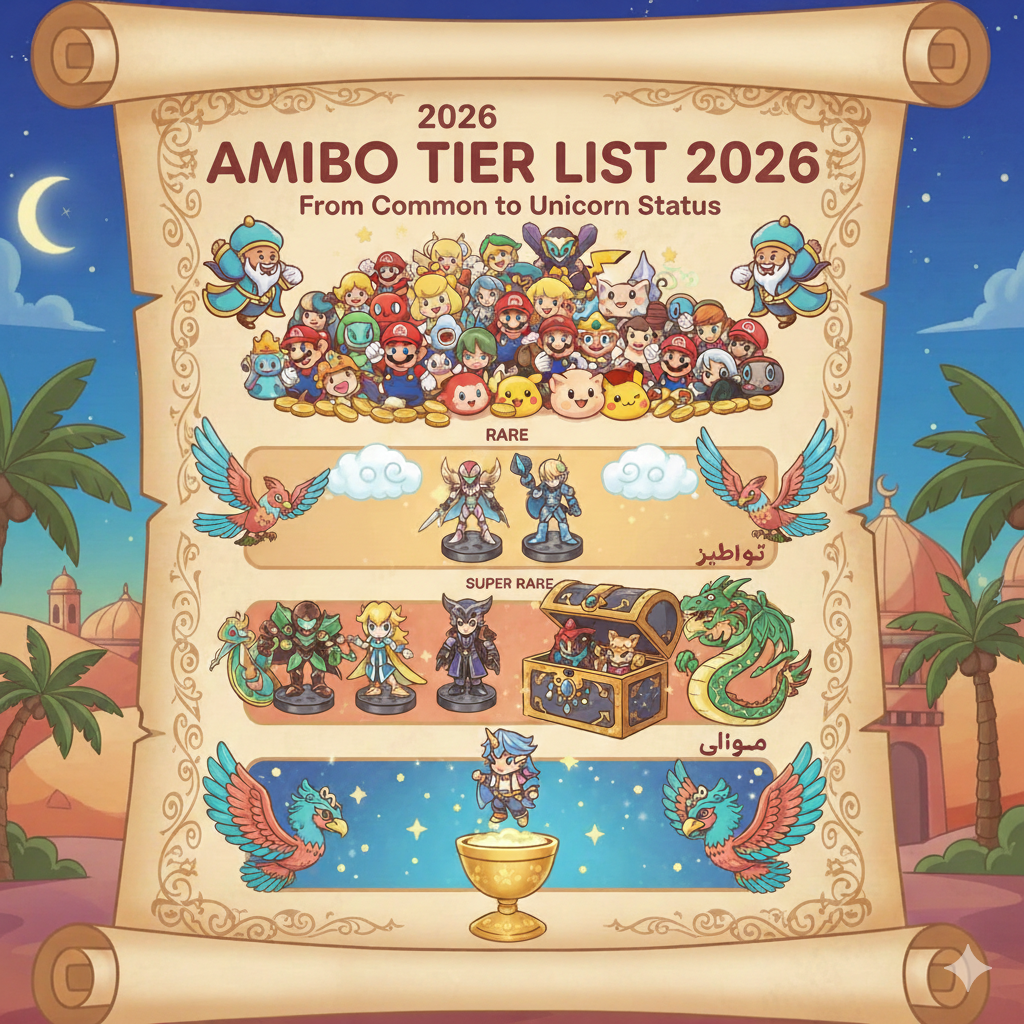
Understanding Amiibo Rarity
Since the infamous "Holy Trinity" shortage of 2014-2015 (Marth, Villager, and Wii Fit Trainer), amiibo rarity has fascinated collectors and frustrated completionists. Unlike most toy lines where supply eventually meets demand, amiibo scarcity stems from Nintendo's conservative production runs, regional exclusivity deals, and unpredictable character popularity. A figure common at launch may become rare years later, while supposed "unicorns" occasionally see surprise restocks.
This guide categorizes amiibo rarity as of February 2026, reflecting current secondary market prices, retail availability, and community consensus. Note that rarity fluctuates with restocks, new releases, and shifting collector interest, so treat this as a snapshot rather than permanent classification.
The Rarity Tier System Explained
The amiibo community uses a four-tier classification system inherited from early shortage discussions on Reddit's r/amiibo subreddit in 2015:
- Tier 1 - Unicorn: Extremely rare, discontinued, commanding $80-$300+ on secondary markets
- Tier 2 - Rare: Hard to find at retail, regional exclusives, typically $30-$80
- Tier 3 - Uncommon: Sporadic retail availability, occasional restocks, $20-$35
- Tier 4 - Common: Readily available at MSRP ($15.99 for figures, $5.99 for cards), often restocked
Prices reflect "New in Box" (NIB) condition. Out-of-box (OOB) figures typically sell for 30-50% less.
Rare amiibo command premium prices on secondary markets
Tier 1: Unicorn Status
Unicorn amiibo represent the holy grail of collecting—figures so rare that finding them at reasonable prices requires patience, luck, and often significant financial investment.
Gold Mega Man (2016)
Original Release: May 20, 2016 (Best Buy exclusive, North America)
Current Market Value: $150-$250 NIB
Released as a Best Buy exclusive to celebrate Mega Man's legacy, Gold Mega Man suffered from extremely limited production. Best Buy allocated roughly 2-4 units per store, and online stock sold out in under 10 minutes. Many collectors never saw one in person. In 2026, this remains one of the most expensive non-custom amiibo.
Qbby (BoxBoy! Series, 2017)
Original Release: July 2017 (Japan exclusive)
Current Market Value: $180-$280 NIB
Qbby, the protagonist of HAL Laboratory's BoxBoy! series, received an amiibo release exclusively in Japan with no Western release. Limited print runs combined with obscure character recognition made this figure rare even in Japan. Importing Qbby in 2026 requires international sellers or specialty import shops, often with inflated shipping costs.
Mega Yarn Yoshi (2015)
Original Release: November 2015
Current Market Value: $120-$200 NIB
The oversized yarn Yoshi amiibo (measuring approximately 8 inches tall) was produced in limited quantities and exclusively sold at select retailers. Its unique yarn construction and large size made it expensive to manufacture ($39.99 MSRP), leading to lower production numbers. Many mint-condition boxes have deteriorated over 11 years, making pristine NIB specimens especially valuable.
Player 2 Corrin (2018)
Original Release: February 2018 (Amazon exclusive)
Current Market Value: $100-$160 NIB
The female version of Fire Emblem Fates' Corrin was released as an Amazon exclusive with minimal promotion. Many collectors didn't realize it launched until it sold out. Nintendo never restocked Player 2 Corrin, and the character's niche fanbase keeps demand steady.
Wedding Mario, Peach, and Bowser (2017)
Original Release: June 2017 (Japan and Europe only)
Current Market Value: $80-$140 each NIB
Released to coincide with Super Mario Odyssey's wedding-themed levels, these three figures were never officially sold in North America. Collectors who wanted them had to import from Europe or Japan, leading to permanent scarcity in the US market. In 2026, complete wedding sets (all three figures) sell for $300+.
Tier 2: Rare Amiibo
Rare amiibo are difficult to find at retail but not impossible. They typically require hunting through multiple stores, checking online restocks, or paying moderate premiums on secondary markets.
Original Holy Trinity (Restocked but Rare)
- Marth (2014): $35-$60 NIB - While restocked several times, demand from Fire Emblem fans keeps this figure scarce
- Villager (2014): $40-$65 NIB - The original run with large forehead is especially valuable ($80+)
- Wii Fit Trainer (2014): $30-$55 NIB - Niche character with infrequent restocks
Sanrio Collaboration Cards (2021 Reprint)
Market Value: $40-$80 per pack NIB
Despite a March 2021 restock, Sanrio amiibo cards remain rare due to overwhelming demand from Animal Crossing players seeking exclusive furniture sets. Scalpers bought massive quantities during restocks, driving secondary market prices to 3-5x MSRP ($5.99 retail). Individual cards from opened packs sell for $8-$15 each.
Twilight Princess Link and Zelda (2016)
Market Value: $50-$90 each NIB
Released alongside The Legend of Zelda: Twilight Princess HD for Wii U, these figures had modest production runs. Twilight Princess's devoted fanbase ensures consistent demand, while Nintendo has not restocked them since 2017.
Splatoon 2 Alternate Colors (2017)
Market Value: $35-$70 each NIB
Neon Pink Inkling Girl, Neon Green Inkling Boy, and Neon Purple Inkling Squid variants from Splatoon 2's launch are harder to find than standard colors. These were produced in lower quantities to incentivize collectors to purchase multiple versions.
Tier 3: Uncommon Amiibo
Uncommon amiibo appear sporadically at major retailers, with occasional restocks keeping them accessible but not abundant.
Most Super Smash Bros. Series Fighters
Characters like Captain Falcon, Little Mac, Lucario, Robin, and Ike see periodic restocks but sell out within weeks. Patient collectors can usually find them at MSRP with diligent checking of Best Buy, GameStop, and Amazon.
Breath of the Wild Champions (2017)
Mipha, Daruk, Revali, and Urbosa amiibo from BOTW had decent production runs but remain popular among Zelda fans. They're restocked annually but sell out quickly, placing them in uncommon territory.
Detective Pikachu (2019)
The large Detective Pikachu amiibo (similar to Mega Yarn Yoshi in size) had moderate production. While not rare, it's harder to find than standard Pikachu figures due to its specialty status.
Tier 4: Common Amiibo
Common amiibo are readily available at most retailers carrying Nintendo products.
Always Available
- Mario (any series): Nintendo's mascot never goes out of stock for long
- Link (most variants): Breath of the Wild and Tears of the Kingdom Links are perpetually restocked
- Pikachu: The Pokémon Company ensures Pikachu amiibo availability
- Kirby: HAL Laboratory's pink puffball maintains consistent retail presence
- Inkling Boy/Girl (standard colors): Splatoon's mascots are regularly restocked
2026 Market Trends
Rising Stars
Several previously common amiibo have become uncommon or rare in 2026:
- Samus (Metroid Dread): Spiked in value as Metroid Prime 4 hype builds
- Byleth (Fire Emblem): Three Houses' enduring popularity increased demand
- Shovel Knight: Third-party amiibo with no restocks since 2018
Falling Stars
Some rare amiibo have become more common due to restocks:
- King K. Rool: Once rare, now uncommon thanks to 2025 restock
- Isabelle (Smash): Summer 2025 restock improved availability
How to Spot Counterfeits
As amiibo values rise, counterfeit figures flood online marketplaces. Here's how to verify authenticity:
Packaging Red Flags
- Blurry Logos: Authentic amiibo have crisp, high-resolution Nintendo logos
- Misspellings: Check for typos in product names or copyright text
- Wrong Fonts: Nintendo uses specific fonts; counterfeits often substitute similar but incorrect typefaces
- Incorrect UPC Codes: Research the correct UPC for each amiibo and compare
Figure Red Flags
- Paint Quality: Authentic amiibo have clean, precise paint applications; fakes show bleeding or smudging
- Plastic Quality: Official figures use high-grade plastics; counterfeits feel cheaper and lighter
- NFC Functionality: While most fakes work functionally, some use incorrect NFC chips that fail to scan
- Base Design: Study photos of authentic bases; counterfeits often have slightly wrong colors or logo placements
Pro tip: Buy from reputable sellers with return policies. If a "unicorn" amiibo is listed at half its market value, it's likely counterfeit.
Where to Buy Rare Amiibo Safely
- Amazon (fulfilled by Amazon): Easier returns if you receive counterfeits
- eBay (check seller ratings): Look for 99%+ positive feedback and established accounts
- Facebook Marketplace/Local Pickup: Inspect in person before purchasing
- r/amiiboSwap (Reddit): Community-vetted trading with reputation systems
- Specialty Retailers: GameStop, Best Buy, and Target restock rare amiibo occasionally
Collecting Strategies
The Patient Collector
Check retailer websites regularly for restocks (GameStop, Best Buy, Target, Amazon). Most "rare" amiibo get restocked eventually, allowing you to buy at MSRP instead of paying premiums. Nintendo's official website and store pages often announce upcoming releases.
The Completionist
Budget $2,000-$5,000 to complete a full NIB collection as of 2026, accounting for unicorns and rare figures. Prioritize unicorns first, as their prices only increase over time.
The Functional Collector
If you only care about NFC functionality, buy OOB figures at 30-50% discounts. Rarity matters far less when boxes aren't a concern.
Conclusion
Amiibo rarity in 2026 reflects a decade of production decisions, collector demand, and Nintendo's unpredictable restock patterns. While unicorn status figures command premium prices, patient collectors can build impressive collections by tracking restocks and prioritizing must-haves. Remember: rarity fluctuates, so today's uncommon amiibo might be tomorrow's unicorn—or vice versa. Collect what you love, not just what's rare, and your collection will bring joy regardless of market trends.