Start with the official catalog
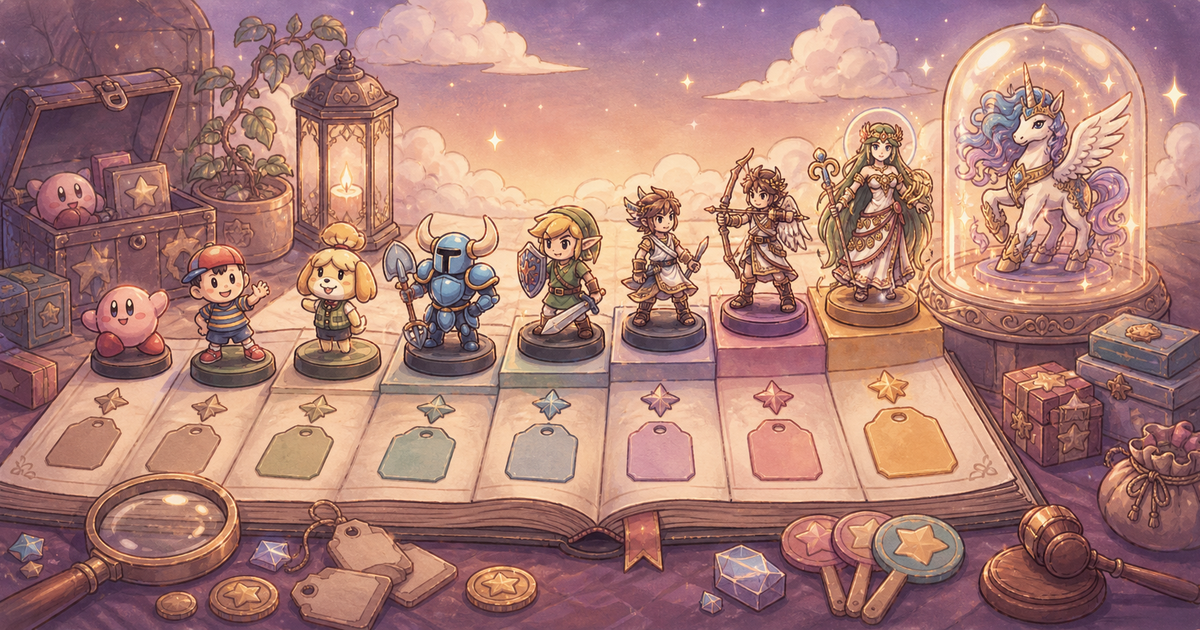
Before judging whether an amiibo is rare, first confirm that it is an official amiibo. Check Nintendo's amiibo line-up, Nintendo Store pages, and release-date records. If a figure is not in the official catalog, treat it as a custom item, NFC card, rumor, or unsupported marketplace listing until better evidence appears.
Rarity is not one thing
Collectors often use "rare" to mean several different things. A figure can be hard to find sealed, easy to find loose, common in Japan, scarce in North America, or temporarily expensive because a game just launched. Those are different situations, and they should change how much you are willing to pay.
A safer rarity framework
- Official and currently stocked: appears on Nintendo or major retailer pages at normal retail pricing.
- Official but intermittently stocked: disappears for stretches, then returns during restocks or game anniversaries.
- Official and region-limited: released in one region or tied to a specific retailer, making imports or resale more common.
- Official and long out of print: rarely appears new at retail and mostly trades through collector marketplaces.
- Not verified as official: do not value it like an amiibo release, even if the listing uses amiibo keywords.
Examples collectors often watch
Figures such as Qbby, Mega Yarn Yoshi, some retailer-exclusive variants, older Super Smash Bros. figures, and certain Zelda or Fire Emblem releases are commonly discussed in collector communities because sealed supply can be uneven. That does not mean every high listing is a fair market price. It only means they deserve closer checking.
How to check prices responsibly
- Use sold listings, not active listings. Active prices show what sellers want. Sold prices show what buyers recently paid.
- Separate NIB from OOB. New-in-box prices are usually much higher than loose display figures.
- Check region and packaging. Japanese, European, and North American packaging can price differently for completionists.
- Watch for restocks. A figure can look rare one week and become normal retail stock after a Nintendo Store update.
- Compare multiple sources. Do not trust one marketplace, one social post, or one old tier list.
Counterfeit and custom-listing risk
The rarer a figure seems, the more careful you should be. Read the listing title and description closely. Words like "custom," "compatible," "NFC," "fan made," or "card" usually mean you are not buying an official Nintendo figure. That may still be fine for personal use, but it should not be priced like a scarce official amiibo.
My collector rule
If I cannot verify the figure in Nintendo's official line-up or a reputable release list, I do not treat it as part of the official collection. If I can verify it, I still check recent sold listings and restock history before paying above retail.
Bottom line
Rarity guides should help you avoid mistakes, not pressure you into expensive purchases. Use official sources to verify the figure, community sources to understand demand, and sold listings to judge price. When those three do not line up, wait.
Comments
No comments yet — be the first to say something.