Introduction to Custom Amiibo
The custom amiibo community represents one of the most creative corners of Nintendo fandom. Since amiibo launched in 2014, talented artists have transformed mass-produced figures into one-of-a-kind sculptures featuring alternate costumes, crossover characters, and original designs. Whether you want to create a gold-plated Link, repaint Isabelle in your favorite villager's color scheme, or sculpt entirely new details onto existing figures, custom amiibo work offers endless creative possibilities.
This guide walks you through the complete process of custom amiibo creation, from selecting your first figure to applying the final protective coating. While the learning curve can be steep, even beginners can produce impressive results with patience, proper materials, and attention to detail.
Important: Custom amiibo retain full NFC functionality. The chip in the base is unaffected by paint or modifications to the figure itself.
Choosing Your First Figure
Best Figures for Beginners
Not all amiibo are equally suited for customization. Beginners should start with figures that have:
- Simple Shapes: Avoid figures with intricate details or many small parts (like Fire Emblem characters with complex armor)
- Smooth Surfaces: Figures with less texture are easier to repaint cleanly
- Common Availability: Practice on inexpensive, readily available figures before attempting rare ones
- Fewer Colors: Characters with simple color schemes reduce complexity
Recommended Starter Figures:
- Kirby: Round, smooth, monochromatic—perfect for learning paint application
- Yoshi: Simple shapes, large surface area, forgiving sculpt
- Toon Link: Cartoony proportions and clear color separation
- Mario: Inexpensive, readily available, iconic design
Avoid for Beginners:
- Smash Bros. characters with complex weapons (Byleth, Pyra/Mythra)
- Figures with translucent parts (Guardian, Ice Climbers)
- Rare or expensive amiibo (save these for when you're experienced)
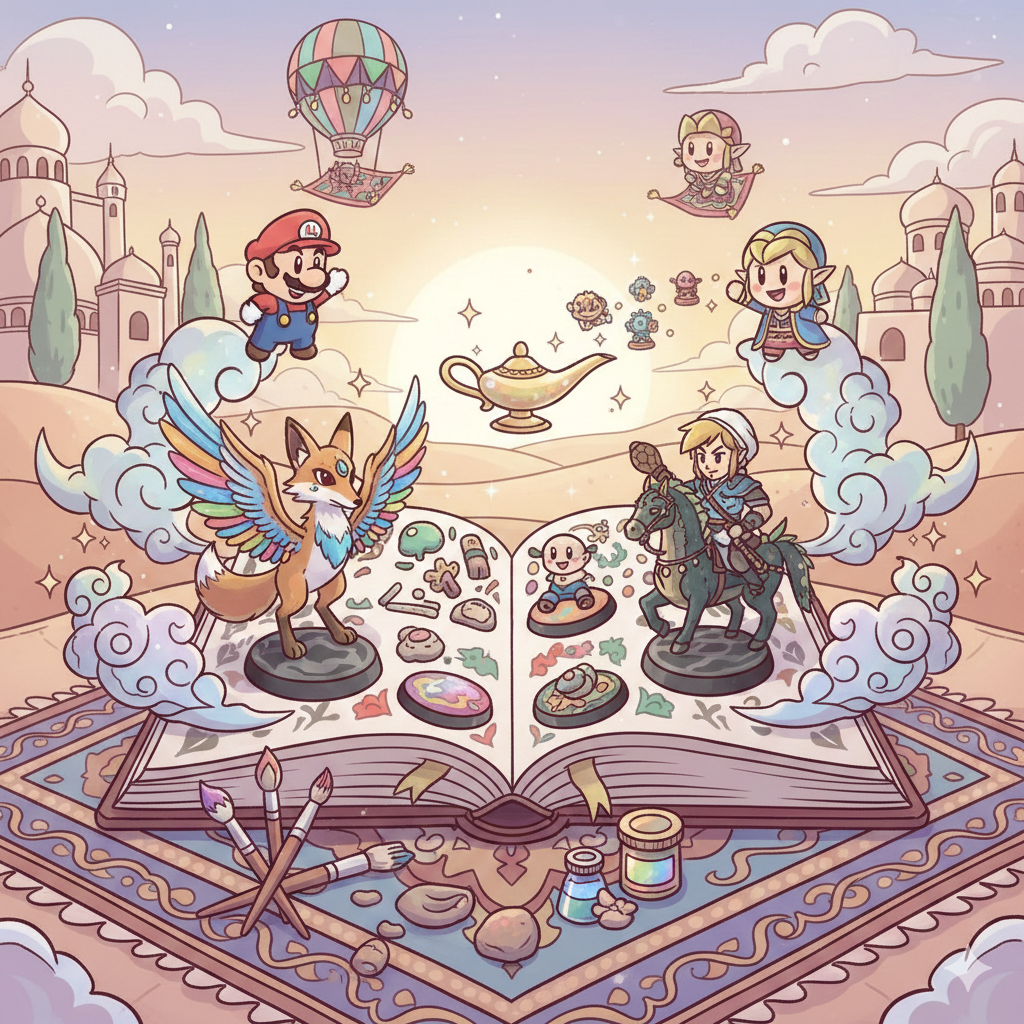
Custom amiibo transform figures into unique art pieces
Essential Materials and Tools
Paint
Acrylic Paints (Recommended):
- Brands: Vallejo Model Color, Citadel (Games Workshop), Army Painter
- Why Acrylic: Water-based, non-toxic, dries quickly, available in hundreds of colors
- Cost: $3-5 per 17ml bottle; starter sets run $30-50 for 10-12 essential colors
Must-Have Colors:
- White (for mixing lighter tones and highlighting)
- Black (for mixing darker tones and lining)
- Primary colors (red, blue, yellow) for custom mixing
- Flesh tones (if painting faces)
- Metallics (gold, silver, bronze) for accents
Primer
Purpose: Primer creates a surface that paint adheres to, preventing chipping and ensuring even coverage.
Recommended Primers:
- Citadel Chaos Black or Corax White Spray Primer: $17-20 per can, high-quality, designed for miniatures
- Army Painter Primer: $15-18 per can, similar quality to Citadel
- Krylon ColorMaster Primer: $5-8 per can, budget option (test on scrap plastic first)
Color Choice: Use white primer for light-colored figures, black for dark figures, gray for neutral starts.
Brushes
Invest in quality brushes—cheap brushes shed bristles and leave streaks.
- Size 0 or 00: Fine detail work (eyes, lines, tiny details)
- Size 1 or 2: General painting (most of the figure)
- Size 4 or 5: Large areas (base coats, backgrounds)
- Recommended Brands: Winsor & Newton Series 7, Raphael 8404, or Army Painter Wargamer brushes
- Cost: $5-20 per brush depending on quality; a basic set costs $20-40
Sealant/Varnish
Purpose: Protects finished paint work from chipping, scratching, and UV damage.
Options:
- Testors Dullcote Spray: Matte finish, professional favorite, $10-12 per can
- Citadel 'Ardcoat or Munitorum Varnish: Brush-on option for targeted gloss or matte, $5-7 per pot
- Krylon Matte Finish: Budget spray option, $7-10 per can
Finish Types: Matte (no shine), satin (slight shine), gloss (high shine). Most custom amiibo use matte for a realistic look.
Additional Supplies
- Isopropyl Alcohol (90%+): For cleaning figures before priming, $3-5 per bottle
- Painter's Tape or Blu-Tack: To mask areas you don't want painted
- Palette: Wet palette (keeps paint moist) or disposable palette paper, $10-20
- Water Cups: Two cups (one for rinsing, one for clean water)
- Paper Towels: For brush drying and cleanup
- Fine Sandpaper (400-600 grit): For smoothing surfaces or removing factory paint, $3-5
- X-Acto Knife: For separating figure from base or removing mold lines, $5-10
- Super Glue (cyanoacrylate): For reattaching parts after painting, $3-5
Preparation Process
Step 1: Disassembly
Many amiibo can be carefully separated from their bases to make painting easier. The NFC chip is in the base, so the figure itself is just plastic.
- Method: Gently heat the connection point with a hairdryer on low heat for 30-60 seconds
- Twist: Slowly twist and pull the figure from the base (some force may be needed)
- Caution: Some figures are glued very securely; forcing them may break pegs
Alternatively, leave the figure attached and carefully tape off the base before painting.
Step 2: Cleaning
Factory amiibo may have mold release agents or oils that prevent paint adhesion.
- Scrub the figure gently with a toothbrush dipped in 90%+ isopropyl alcohol
- Rinse with water and let dry completely (1-2 hours)
Step 3: Surface Preparation
If repainting over existing paint:
- Option A (Recommended): Lightly sand the surface with 400-600 grit sandpaper to create texture for primer
- Option B (Advanced): Strip factory paint using acetone or Simple Green (soak 24 hours, scrub with toothbrush)
Step 4: Priming
Priming is non-negotiable for durable custom work.
- Environment: Spray outdoors or in a well-ventilated area, ideally 60-75°F with low humidity
- Technique: Hold spray can 6-8 inches away, use short bursts (1-2 seconds), multiple thin coats rather than one thick coat
- Drying: Wait 30 minutes between coats; fully cure for 24 hours before painting
- Coverage: 2-3 light coats should cover evenly without obscuring details
Critical mistake to avoid: Over-priming fills in sculpt details. Always use thin coats.
Painting Techniques
Base Coating
Apply the primary colors to establish your design.
- Thin Your Paint: Add 10-20% water to acrylic paint for smoother application
- Multiple Coats: 2-3 thin coats provide better coverage than one thick coat
- Brush Technique: Use smooth, even strokes in one direction; avoid back-and-forth scrubbing
- Drying Time: Wait 15-30 minutes between coats
Detail Work
Adding fine details like eyes, lines, and accents.
- Steady Hand: Rest your wrist on a stable surface; brace your painting hand with your other hand
- Thin Paint: Details require very thin paint; add more water than for base coats
- Fine Brushes: Use size 0 or 00 brushes
- Patience: Rush-free detail work is essential; take breaks to avoid fatigue
Shading and Highlighting
Advanced techniques that add depth and dimension.
Shading (Washes):
- Dilute dark paint (black or dark brown) with 70-80% water
- Apply to recessed areas (folds, crevices); capillary action draws wash into details
- Let dry completely; adds realistic shadows
Highlighting (Drybrushing):
- Dip brush in light color, wipe most paint off on paper towel
- Lightly brush over raised areas; paint catches on edges
- Creates natural highlights and texture
Common Painting Challenges
- Streaks: Paint too thick or brush too dry; thin paint and use a damp brush
- Brush Marks: Paint too thick; apply thinner coats
- Coverage Issues: Wrong primer color; white primer shows through dark paint (use dark primer for dark colors)
- Smudging: Not waiting long enough between coats; patience is key
Finishing and Reassembly
Step 1: Final Inspection
Examine your work under bright light. Touch up any missed spots or mistakes with a fine brush.
Step 2: Sealing
- Wait 24 hours after final paint layer before sealing
- Apply 2-3 light coats of varnish spray, waiting 30 minutes between coats
- Hold can 8-10 inches away, use smooth sweeping motions
- Cure for 48 hours before handling extensively
Step 3: Reassembly
- If you separated the figure from the base, reattach using super glue on the peg
- Hold firmly for 30 seconds; let cure for 24 hours before handling
- Test NFC functionality by scanning in a compatible game
Safety and Workspace Tips
Safety Precautions
- Ventilation: Always use spray primers and sealants outdoors or with proper ventilation (spray booth or open windows)
- Respirator Mask: Wear a mask rated for organic vapors when spraying (3M P100 or equivalent)
- Gloves: Nitrile gloves protect hands from paint and solvents
- Eye Protection: Safety glasses when spraying or sanding
Workspace Setup
- Good Lighting: Daylight LED lamps (5000-6500K) show true colors and details
- Protected Surface: Cover your workspace with newspaper, cardboard, or a silicone mat
- Organization: Keep paints organized by color; label custom mixes
- Comfortable Seating: Painting sessions can last 1-3 hours; ergonomic seating prevents fatigue
Inspiration Gallery: Popular Custom Ideas
Alternate Costumes
- Mario in different power-up states (Fire Mario, Tanooki Mario, Frog Mario)
- Link in alternate outfits from Breath of the Wild or Tears of the Kingdom
- Samus in various suit designs (Phazon Suit, Gravity Suit, Zero Suit recolors)
Crossover Characters
- Kirby painted as other characters (Meta Knight colors, Dedede colors)
- Inkling in custom gear combinations
- Mario characters in different franchise styles (cel-shaded, realistic, chibi)
Metallic and Special Effects
- Gold or silver chrome finishes (using Molotow chrome markers)
- Weathered/battle-damaged effects (dry brushing, washes)
- Glow-in-the-dark paint accents
Original Characters
- Custom Animal Crossing villagers
- OC Pokémon or fakemon designs
- Mii Fighter designs brought to life
Community and Resources
Connect with fellow custom amiibo artists:
- r/amiibo (Reddit): "Custom" flair for sharing work and getting feedback
- Instagram: Search #customamiibo for inspiration and technique examples
- YouTube: Search "custom amiibo tutorial" for step-by-step video guides
- Online Forums: Many amiibo collecting communities have dedicated custom sections
Conclusion
Custom amiibo painting transforms collecting from passive ownership into active creation. While the initial learning curve can be challenging, the satisfaction of holding a truly unique figure—one that exists nowhere else in the world—makes the effort worthwhile. Start with simple repaints, master your materials and techniques, and gradually tackle more ambitious projects. Your first custom may have imperfections, but every figure you paint improves your skills. Most importantly: have fun, experiment boldly, and celebrate the creative spirit that makes the amiibo community so vibrant.